Melbourne · Palm Bay · Cocoa · Merritt Island · Titusville · all of Brevard
Stump grinding in Melbourne, FL & Brevard County
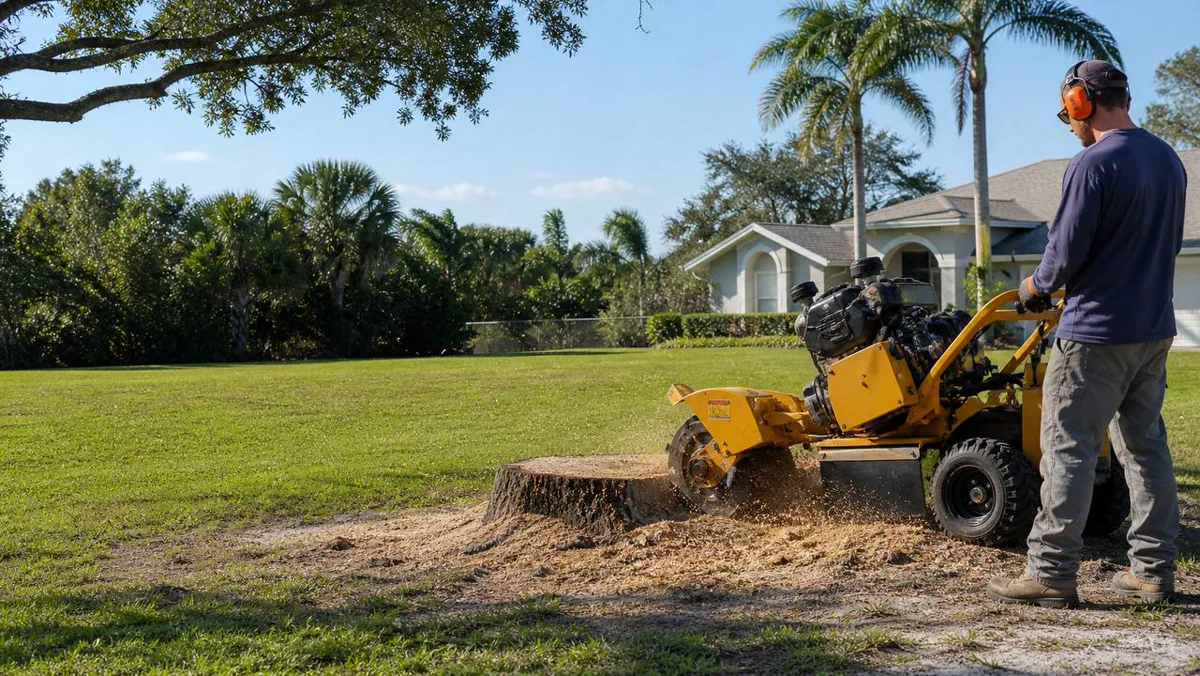
Melbourne FL Stump Grinding helps Brevard homeowners get rid of unwanted stumps — single stumps, multiple-stump cleanups, oak stumps, palm stumps, and storm leftovers — ground below grade so the area can be finished with soil, sod, mulch, or pavers. You can call or send the form even if you have not measured anything yet; a plain-language description is enough to start.
Call or Request Stump Grinding Help
Tell us what you can: where the stump is, about how many there are, and what you want the area ready for. You do not need to measure or diagnose anything before reaching out.
Cost and scope
What Affects Stump Grinding Cost
Stump grinding cost usually depends on stump size, number of stumps, grinding depth, machine access, cleanup, and wood type. You can ask about pricing before you know every detail.
The biggest price factors are count (multiple stumps can often be handled in one visit), depth (standard grinding versus deeper prep for replanting or hardscape work), access (whether the grinder can reach the stump safely), and species (dense oak and fibrous palm behave differently). The pricing page explains the common cost factors, but you can call before you know them all.
If the stump follows a larger removal project, note whether a broader tree service already handled the canopy and trunk work so the grinding scope focuses on what remains at grade.
Services and stump problems
When Stump Grinding Helps Your Yard
What sets a stump grinding price in Brevard — diameter, count, depth, access, species — and why this trade can ballpark honestly by phone.
Read more →Full stump removal digs out the root ball; grinding erases the stump below grade for a fraction of the cost. When each one actually makes sense.
Read more →Five stumps, fifteen stumps, a cleared lot's worth — one mobilization, per-stump prices that drop, one cleanup.
Read more →Brevard's hardwood heavyweights: big diameters, dense wood, wide surface roots — and the live oak questions, answered honestly.
Read more →Palms aren't true wood — no rings, fibrous, stringy to grind, and they regrow from the heart if you leave it. Different job, different page.
Read more →After the tree crew leaves, the stumps remain. Post-storm grinding across Brevard, including the snapped-trunk leftovers hurricane season makes.
Read more →Next step
What Happens After You Call or Talk Through the Stump
Ballpark by phone
Share what you know about the stump, where it is, and the city. If more detail is needed, the follow-up can happen by phone; you do not need to inspect the yard before starting.
Grind day
Public utilities located through 811 where the job calls for it; private lines — sprinklers, lighting, pool runs — found by asking you and probing first. Then the stump comes down 6–12 inches below grade, surface roots included where wanted.
Chips & cleanup
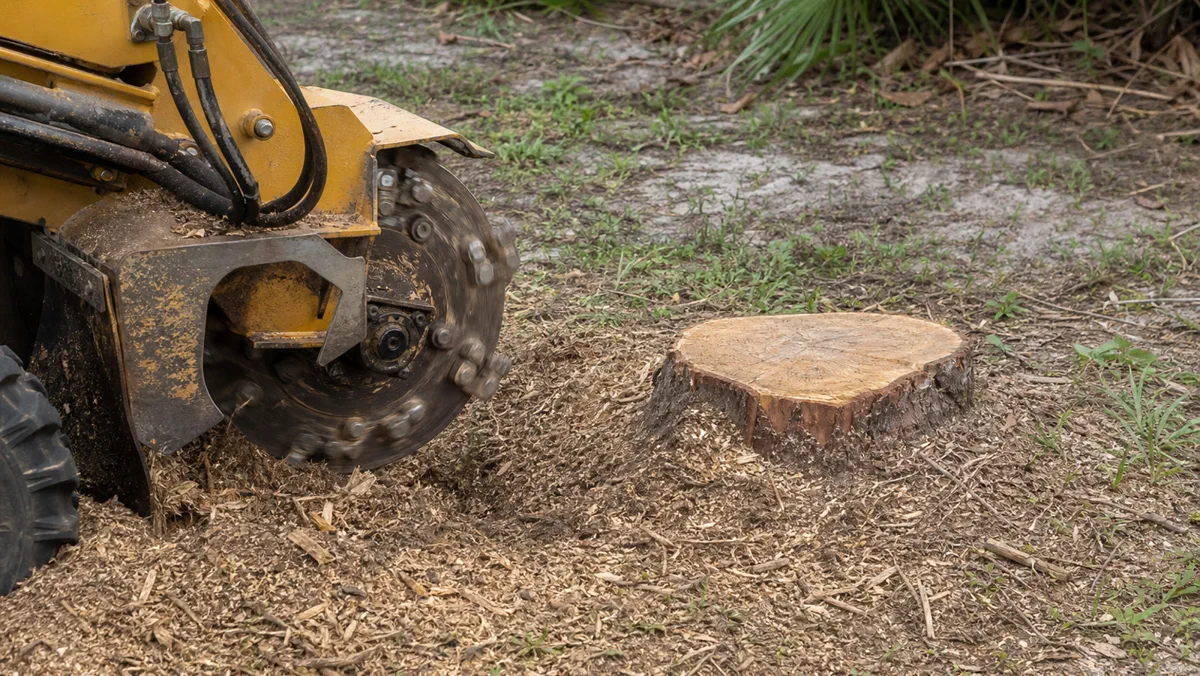
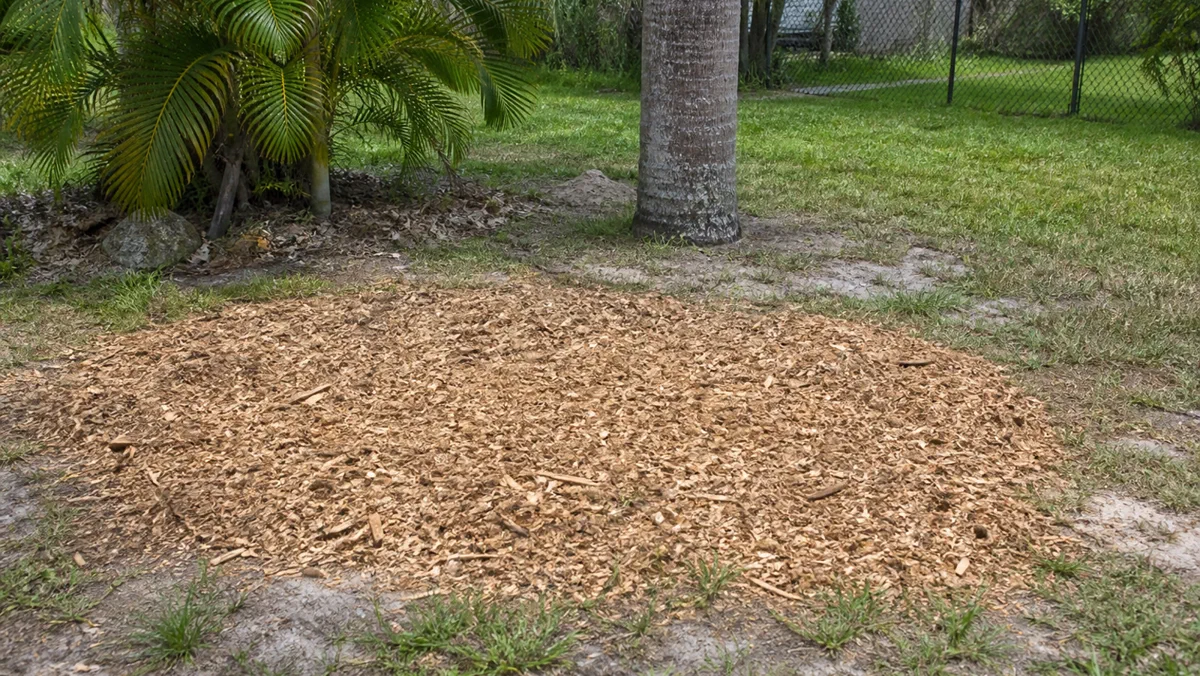
The hole is typically backfilled with chips, and surplus chips can be discussed as mulch or hauled away as a quoted option. Before sod or planting, the area may need soil added as chips settle.
Project visuals
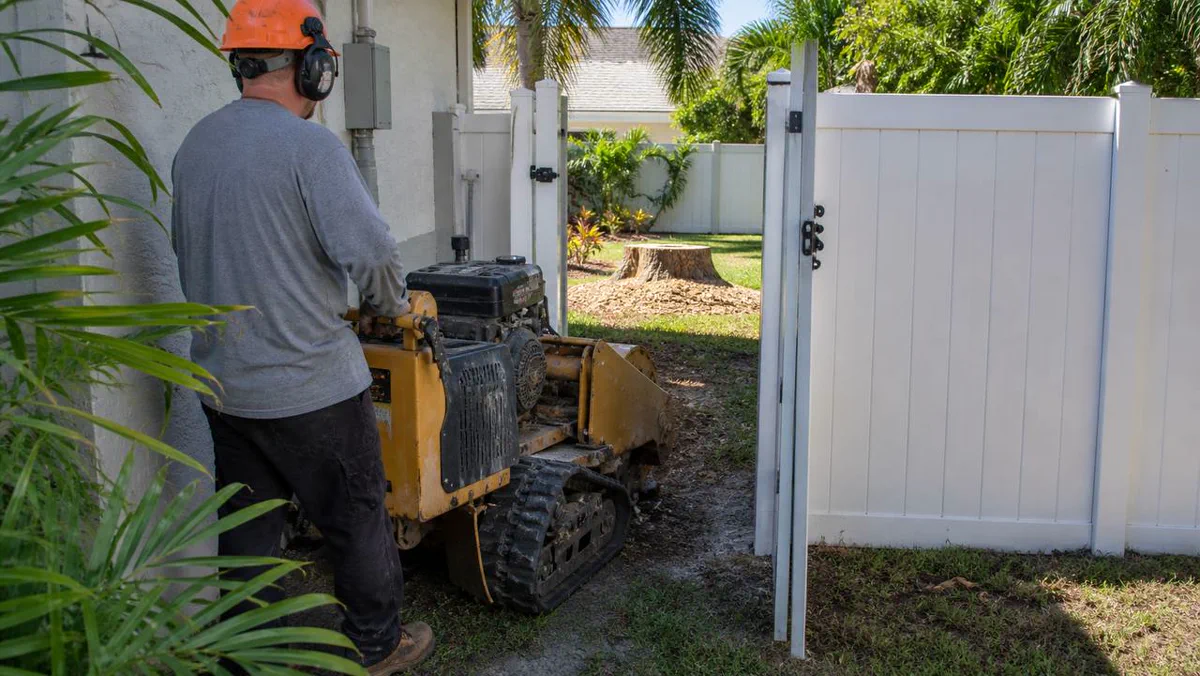
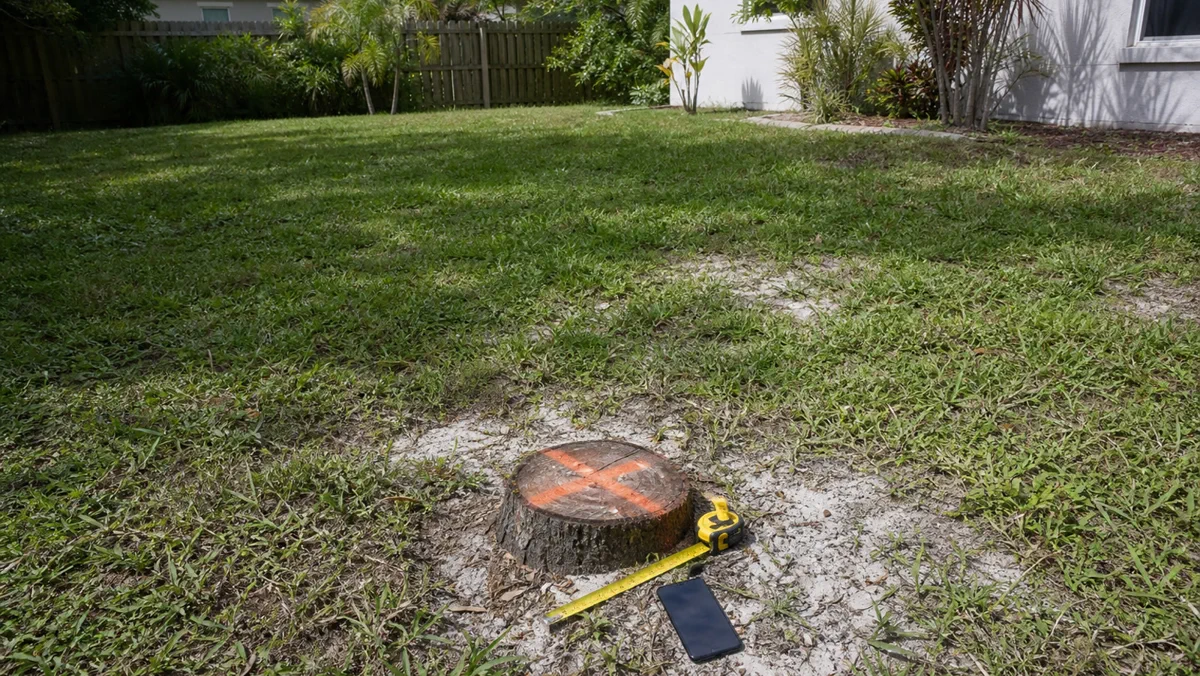
What the stump grinding visit can involve
FAQs
Questions Homeowners Ask About Stump Grinding
How is stump grinding priced?
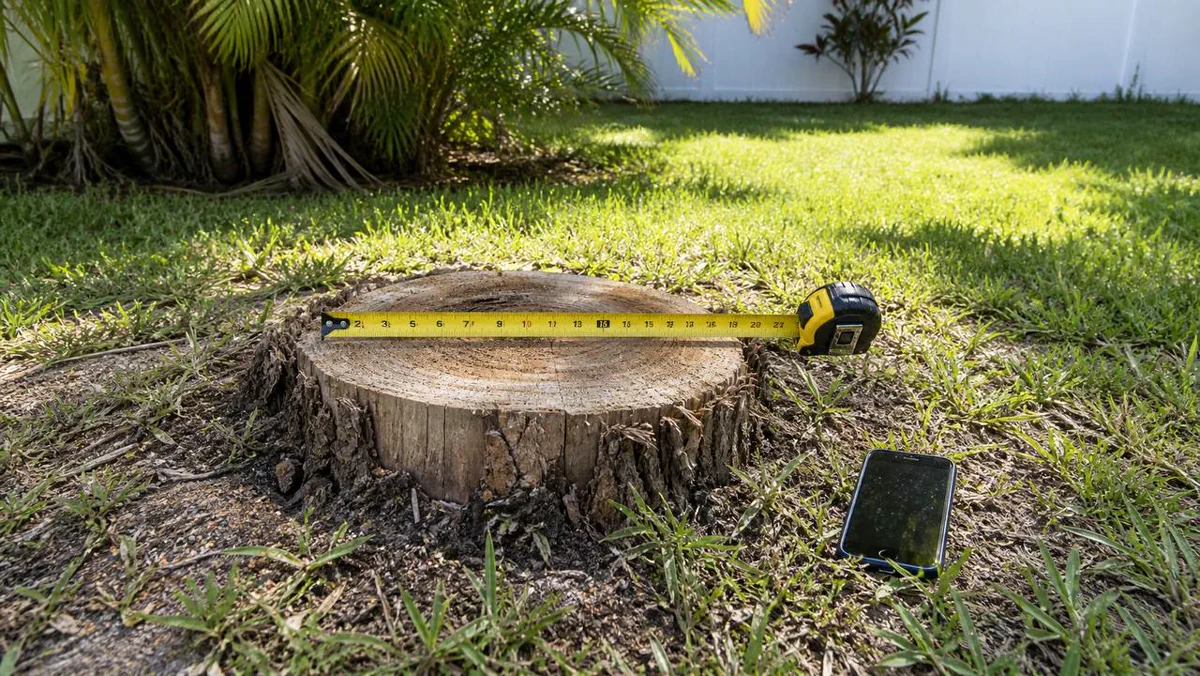
By the inch of diameter, mostly — measured across the widest part of the trunk at ground level. Count, depth, access, and species adjust from there. It's one of the most straightforward services to discuss by phone in the trades: width, how many, and your city usually produce a realistic ballpark on the first call.
Do I need to measure my stump before calling?
No. A measurement can help with pricing, but it is not required before you call or send the form. If you do not know the width, describe the stump in plain language — for example, whether it is small, trash-can-lid wide, or a large oak stump — and the follow-up call can confirm what else is needed.
How deep does grinding go?
Typically 6 to 12 inches below grade — enough to plant grass, lay sod, or set pavers over the spot. Deeper grinds for replanting a tree in the same hole or for construction prep are available and quoted as such. What grinding doesn't do is chase every lateral root across the yard; the visible surface roots near the stump can be ground, and that can be discussed before work begins.
What happens to all the wood chips?
A surprising volume — a big stump produces several wheelbarrows. Standard practice backfills the hole with chips (they settle as they decompose, so the spot gets topped off with soil before sod), and surplus chips can be raked into beds as mulch or hauled, which is a quoted option.
Will grinding wreck my sprinklers?
Not if they're found first. Irrigation lines are the most common casualty in this trade because 811 utility locates don't mark private lines — sprinklers, low-voltage lighting, pool plumbing. Public utilities get the 811 treatment; private lines get found by asking you and by careful probing. Mentioning what's buried near the stump is the single most useful thing you can add to a request.
Do I need a permit to grind a stump in Brevard?
Generally no for grinding a stump from an already-removed tree — permits in Brevard jurisdictions typically attach to removing the living tree, not the leftover stump. There are wrinkles by city and for protected species, covered honestly on the permit page.
Call About Stump Grinding in Brevard County
Call or send the form with whatever you know. You do not need exact measurements before asking about the next step.